Talk to Me 2 doesn’t try to reinvent the terror of the original—it sharpens it, deepens it, and then drives it straight into the psyche. Where the first film explored curiosity and grief, this sequel is about loss of agency. Not just being haunted, but being overwritten. From its opening moments, the film makes it clear: this time, the spirits aren’t visitors—they’re invaders.
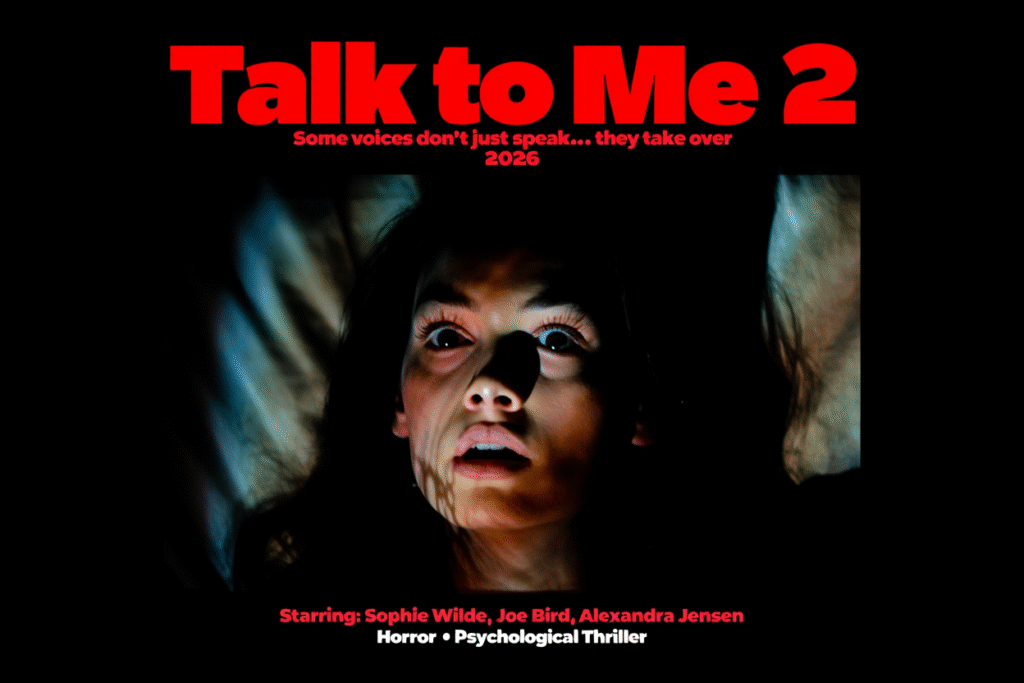
Sophie Wilde’s return grounds the sequel emotionally, and her performance is even more unsettling than before. She carries visible trauma from the original events, and the film smartly treats her not as a “final girl,” but as someone permanently altered. Every glance, every hesitation suggests a character who knows exactly how bad this can get—and is powerless to stop it from spreading.
Joe Bird and Alexandra Jensen bring volatile energy to the new group, embodying a generation that treats danger as content and fear as entertainment. Their characters don’t feel careless in a cliché horror way; they feel modern—desensitized, ironic, and hungry for sensation. That realism makes their descent far more disturbing, because it feels inevitable rather than foolish.
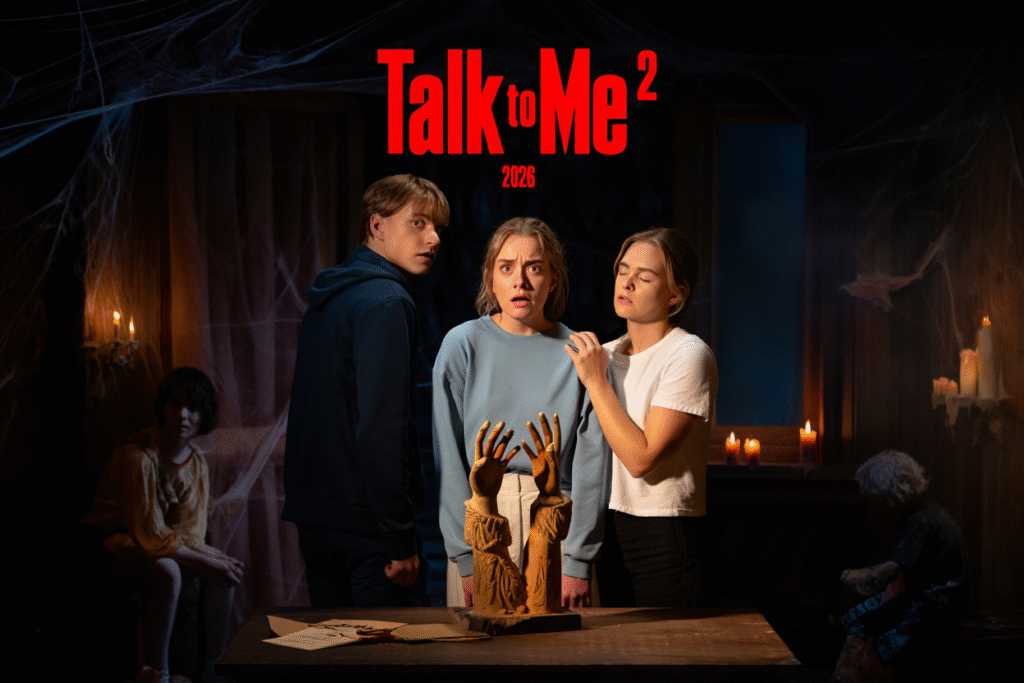
The new artifact tied to the cursed hands is a clever expansion of the mythology. Instead of repeating the same ritual mechanics, the sequel explores contagion—how stories, objects, and experiences carry trauma forward. The spirit doesn’t just latch onto individuals; it moves through social spaces, friendships, and emotional vulnerabilities like a virus.
Visually, Talk to Me 2 is colder and more invasive. The camera lingers too close, often framing faces in ways that feel claustrophobic and wrong. Reflections, shadows, and negative space are used relentlessly, creating the constant sense that someone—or something—is already standing where it shouldn’t be.
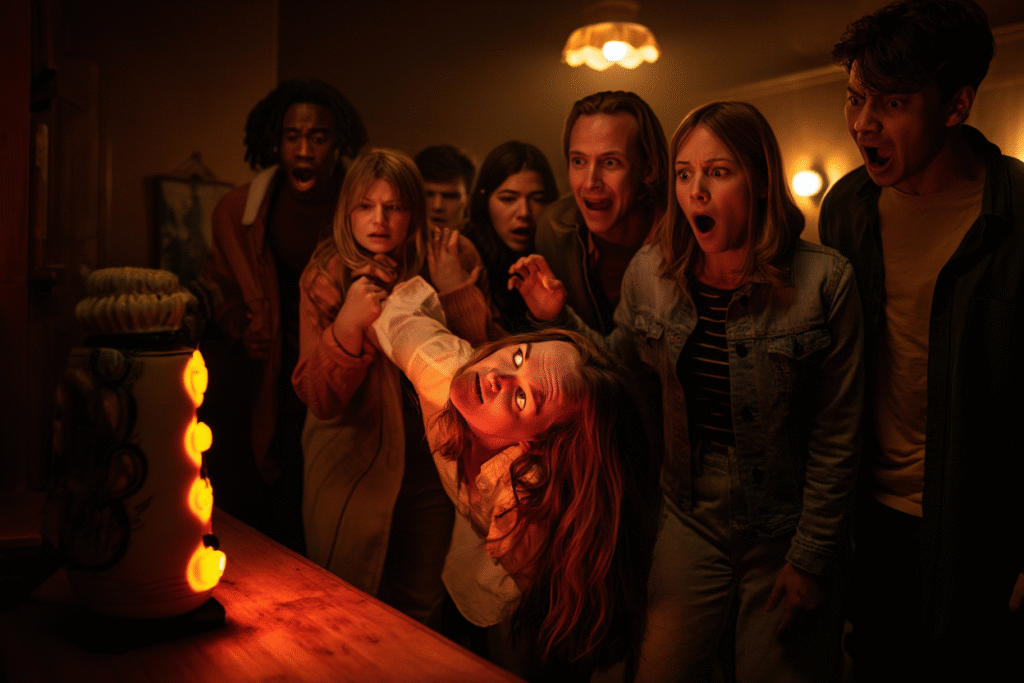
What makes the horror truly effective is how possession is portrayed. This isn’t head-spinning, voice-changing spectacle. It’s subtle erosion. Characters begin acting slightly out of sync with themselves—making cruel jokes, indulging violent thoughts, crossing boundaries they once feared. The scariest moments come when you’re not sure if it’s the spirit talking… or them finally letting go.
Sound design plays a crucial role. Whispers bleed into silence, breaths linger too long, and sudden drops in audio create moments of panic rather than relief. The film understands that fear isn’t always loud—sometimes it’s the absence of reassurance.
Psychologically, the sequel is far more aggressive than the original. It asks unsettling questions about identity: If a voice lives in your head long enough, does it become yours? And if the spirit feeds on suppressed impulses, is it creating evil—or revealing it?
The pacing is deliberately unforgiving. Once the possession escalates, the film barely allows the audience to breathe. There’s no safe midpoint, no comforting lull—just a tightening grip that mirrors the characters’ loss of control. Even moments of connection feel temporary, like borrowed time.
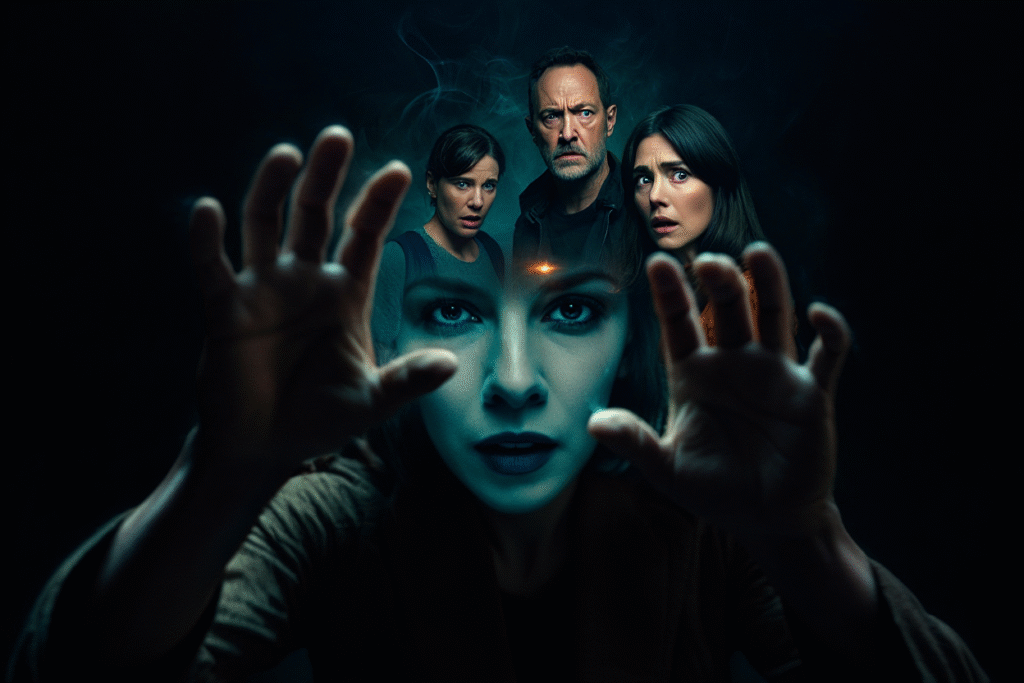
By the time Talk to Me 2 reaches its devastating final act, it becomes clear this is not a sequel interested in closure. It’s interested in consequence. The ending doesn’t scream—it infects, lingering long after the screen goes black. Talk to Me 2 proves that some horrors don’t end when you let go of the hand… because sometimes, the hand never lets go of you.