The Discovery of the Titanic Wreck: Uncovering the Secrets of a Maritime Legend
More than seven decades after the tragic sinking of the RMS Titanic, one of the world’s greatest maritime mysteries was finally brought back into the light. The discovery of the Titanic wreck deep beneath the Atlantic Ocean became a historic moment in underwater exploration and forever changed humanity’s understanding of the disaster that shocked the world in 1912.

The RMS Titanic, once celebrated as the largest and most luxurious passenger ship ever built, sank on April 15, 1912, after colliding with an iceberg during its maiden voyage from Southampton to New York. More than 1,500 passengers and crew members lost their lives in the freezing waters of the North Atlantic, making the tragedy one of the deadliest peacetime maritime disasters in history.
For decades, the exact location of the ship remained unknown. Numerous expeditions attempted to locate the wreck, but the immense depth of the ocean and harsh underwater conditions made the search nearly impossible. Finally, in 1985, a joint American-French expedition led by oceanographer Robert Ballard successfully discovered the remains of the Titanic approximately 4,000 meters beneath the ocean’s surface. The following explorations in 1986 provided humanity with its first detailed views of the wreckage.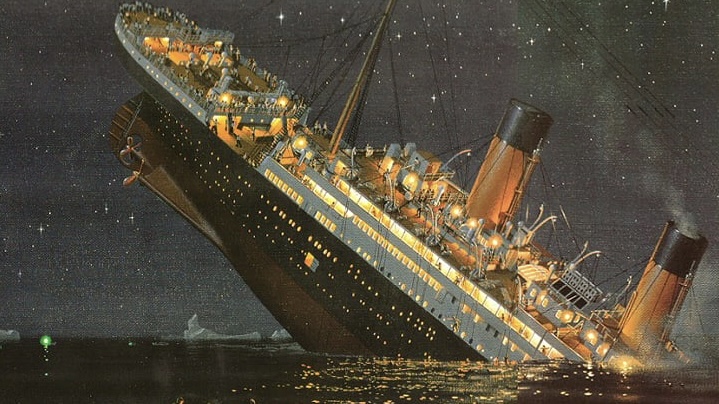
What researchers found was both breathtaking and heartbreaking. The massive ship had split into two sections before sinking to the ocean floor, scattering debris across a vast underwater field. Despite spending decades beneath the sea, many parts of the Titanic remained remarkably preserved. Explorers observed grand staircases, rust-covered railings, boilers, and sections of the once-majestic hull resting silently in darkness.
Among the most emotional discoveries were the personal belongings left behind by passengers and crew members. Shoes, watches, dishes, suitcases, and handwritten letters painted a haunting portrait of lives interrupted by tragedy. These artifacts transformed the Titanic from a historical event into a deeply human story filled with personal loss and forgotten dreams.
The wreck also provided scientists and historians with crucial evidence about the ship’s final moments. Detailed examinations helped confirm how the iceberg damaged the hull and revealed how structural weaknesses contributed to the rapid sinking. Advanced underwater technology allowed experts to reconstruct the sequence of events with greater accuracy than ever before.

Beyond its scientific importance, the discovery of the Titanic reignited worldwide fascination with the legendary ship. Books, documentaries, museum exhibitions, and films introduced new generations to the story, turning the Titanic into a global symbol of ambition, human vulnerability, and the dangers of overconfidence in technology.
Today, the Titanic continues to rest silently beneath the Atlantic Ocean as both a memorial and a historical treasure. Although time, corrosion, and deep-sea bacteria continue to slowly consume the wreck, its legacy remains stronger than ever. The discovery of the Titanic not only solved one of history’s greatest maritime mysteries but also reminded the world of the enduring power of memory, exploration, and human curiosity.